
We are straight up
Custom Stairs & Stair Rectification
Bringing outdated commercial stair systems up to current NCC and Australian Standards compliance — structural upgrades, balustrade replacements, handrail installations, and tread rectification.
Old Stairs.
New Standards. Sorted.
Many commercial buildings across Melbourne contain stair systems that were built to standards no longer in force — outdated balustrade heights, non-compliant handrail profiles, inadequate structural fixings, or tread dimensions that fall outside current NCC requirements. When these buildings are refurbished, change use, or face a compliance audit, the stairs need to be brought up to code.
That’s where we come in. Straight Up Metal Services specialises in commercial stair rectification — assessing existing stair systems against current requirements and carrying out whatever structural, balustrade, handrail, or tread work is needed to achieve full compliance. We work around live building operations wherever possible to minimise disruption.
NCC & AS 1657 compliance assessment
Balustrade removal, replacement & upgrade
Handrail installation & repositioning
Tread nosing replacement & anti-slip upgrades
Structural stair repairs & modifications
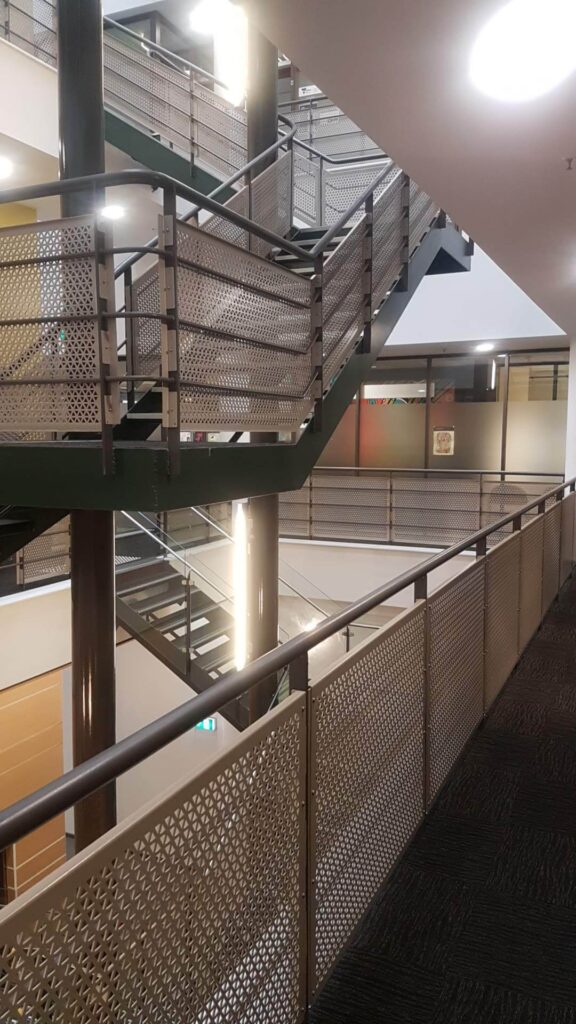
Is your building due for a compliance audit? NCC requirements for commercial stairways are regularly updated. Older buildings undergoing refurbishment, change of use, or routine audit often require stair upgrades to meet current standards.
What we get called in to Fix
These are the most common stair compliance issues we encounter in older commercial buildings across Melbourne. If your building has any of these, a rectification programme will typically be required before a compliance certificate can be issued.
Balustrade Height
Older balustrade systems frequently fall below current minimum height requirements — particularly on stairs above 1m in height where a minimum 1000mm balustrade is mandated.
Ref: NCC Section D / AS 1657
Climbable Balustrades
Horizontal rail or ladder-style balustrades that present a climbability risk — particularly in buildings used by or accessible to children — are frequently flagged in compliance audits and require replacement.
Ref: NCC Section D — Anti-Climb
Balustrade Opening Size
Infill openings larger than 125mm between balusters — or infill configurations that allow passage of a 125mm sphere — are non-compliant and require infill reduction or full panel replacement.
Ref: NCC — 125mm Sphere Rule
Non-Compliant Handrails
Handrails at incorrect heights, missing from one or both sides, with non-graspable profiles, or without compliant terminations are among the most common defects identified in stair compliance audits.
Ref: AS 1657 — Handrail Requirements
Inadequate Structural Fixings
Balustrade posts and handrail brackets that were fixed to inadequate substrates, with undersized fixings, or without proper structural backing — failing to meet current load requirements — are a frequent rectification scope item.
Ref: AS 1657 — Load Requirements
Tread & Nosing Defects
Worn, damaged, or missing tread nosings — or tread dimensions outside the compliant rise-and-going range — create both a safety hazard and a compliance issue requiring tread replacement or nosing upgrades.
Ref: NCC — Rise & Going Requirements
Feature work from the field.
Check out some of our stair rectification projects over the years. If you need a professional metal fabricator, reach out to the Straight Up Metal Services team today.


The Standards We Work To.
All rectification work is carried out in accordance with the current National Construction Code and relevant Australian Standards. We work with building surveyors, certifiers, and project engineers throughout the process to ensure the completed works achieve full compliance and can be signed off without further remediation.
NCC
National Construction Code
The primary regulatory framework governing stair design and construction in commercial buildings — including height, opening size, handrail requirements, and structural performance.
AS
AS 1657 — Fixed Platforms, Walkways, Stairways & Ladders
The Australian Standard governing the design, fabrication, and installation of stair systems, handrails, and balustrades in commercial and industrial environments.
DDA
Disability Discrimination Act — Access Requirements
Where buildings are subject to DDA access obligations, stair rectification often includes handrail extensions, tactile indicators, and tread contrast marking to meet access requirements.
BCA
Building Code of Australia
Older buildings may be assessed against historical BCA versions — we understand how to navigate both current and transitional requirements when working on existing building stock.
Assessment to Sign-Off. Start to Finish.
01
Site Assessment
We visit the site to inspect the existing stair system and assess it against current NCC and AS 1657 requirements — identifying every non-compliance item and documenting the full scope of rectification works required.
02
Scope & Quote
We provide a clear, itemised quote covering exactly what needs to be done — no padding, no surprises. Where the scope is complex, we can stage the works to suit the building's operational needs and budget.
03
Fabrication & Preparation
All replacement components are fabricated in our Somerton workshop to the exact dimensions required. Where possible, we prefabricate sections off-site to minimise installation time in the live building.
04
Installation
Works are carried out around the building's operational schedule — after hours, on weekends, or in staged sections — to minimise disruption to occupants and building management.
05
InstallationCompliance Documentation & Sign-Off
On completion, we provide full documentation of the works carried out for submission to the building surveyor or certifier. We coordinate with the certifying authority to ensure smooth sign-off.
Who do we work with.
Building Owners & Managers
Commercial landlords and building managers facing compliance audit outcomes or preparing for a change of tenancy or building use that triggers a stair compliance review.
Refurbishment Contractors
Builders and fitout contractors undertaking commercial refurbishment projects where stair compliance works are part of the overall scope — as a subcontract package or direct engagement.
Facility Managers
Facility and property managers responsible for ongoing compliance of occupied commercial buildings — particularly those managing older building stock across multiple tenancies.
Powder Coat
Anodised
Mill Finish
Building Surveyors
Building surveyors and certifiers who need a reliable fabrication and installation partner to carry out rectification works identified during an audit — on time and with full documentation on completion.
Got a stair compliance issue?
Get in touch